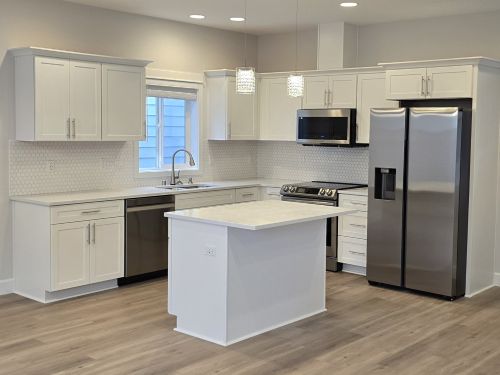
Choosing the Right Tile for Kitchens and Bathrooms
When planning a bathroom or kitchen renovation, choosing the right tile is one of the most important design and performance decisions you’ll make. Whether you’re upgrading flooring, walls, showers, or backsplashes, the material you select affects durability, maintenance, moisture resistance, and overall aesthetics. Below is a clear, straightforward breakdown of ceramic, porcelain, and natural stone tiles, including where they work best and the pros and cons of each.

Ceramic Tile
Ceramic tile is one of the most popular options for both bathrooms and kitchens thanks to its affordability, versatility, and ease of installation.
What is Ceramic Tile?
Ceramic tile is made from clay and other natural materials that are fired at high temperatures. It is typically softer and less dense than porcelain, making it easier to cut and install.
How to Best Use Ceramic Tile
Ceramic tiles are excellent for:
- Bathroom walls and backsplashes
- Light- to medium-use floors
- Kitchen backsplashes
- Accent walls
Ceramic is ideal in areas where moisture is present but not constant, such as half bathrooms and low-traffic kitchen zones.
Pros
- Budget-friendly, making it ideal for large areas
- Easy to cut and install, reducing labor costs
- Available in hundreds of colors and patterns
- Resistant to scratches and staining
- Lower maintenance than natural stone
Cons
- Not as durable as porcelain
- More porous. Absorption rate is higher than porcelain
- Can crack under heavy impact
- Not the best choice for high-moisture or outdoor conditions
Porcelain Tile
Porcelain tile is known for its strength, durability, and low water absorption. Therefore, it’s one of the best all-around choices for kitchens and bathrooms.
What is Porcelain Tile?
Porcelain is made from refined clay and fired at extremely high temperatures, producing a dense, hard material with excellent resistance to moisture and wear.
How to Best Use Porcelain Tile
Porcelain is an outstanding option for:
- Bathroom floors and shower walls
- Kitchen flooring
- High-traffic areas
- Outdoor spaces (frost-resistant varieties)
Because porcelain absorbs very little water, it performs exceptionally well in wet environments.
Pros
- Extremely durable and long-lasting
- Low water absorption. Great for showers and bathroom floors
- Suitable for indoor and outdoor applications
- Available in wood-look, stone-look, and modern finishes
- Resistant to stains, scratches, and fading
Cons
- More expensive than ceramic
- Difficult to cut, which increases installation labor
- Heavy, which may affect shipping and logistics
Natural Stone Tile
Natural stone offers unmatched beauty and uniqueness. Each piece brings organic character that cannot be replicated by manufactured tile.
Defining Natural Stone Tile
Natural stone includes materials such as:
- Marble
- Granite
- Slate
- Travertine
- Limestone
Each stone type has its own properties, making natural stone a premium choice for luxury home projects.
How to Best Use Natural Stone Tile
Natural stone works beautifully in:
- High-end bathroom flooring and shower walls
- Kitchen floors and feature walls
- Entryways and living areas
- Fireplace surrounds
Stone adds warmth and character but often requires more maintenance than ceramic or porcelain.
Pros
- Every tile is unique, creating a one-of-a-kind look
- Timeless, luxurious appearance
- Extremely durable when cared for properly
- Adds value and sophistication to the home
Cons
- Higher cost than ceramic or porcelain
- Requires regular sealing to prevent staining
- Can be slippery or porous depending on material
- Some stones are softer and prone to scratching or etching
Which Tile Type is Best for Your Home?
Choosing the right tile comes down to where it will be installed and how the space is used.
For bathrooms with heavy moisture: Choose porcelain tile for floors and shower areas.
For kitchen backsplashes or decorative walls: Ceramic tile offers affordability and plenty of design versatility.
For luxury finishes or unique natural beauty: Natural stone tile provides a premium, timeless look.
If you’re unsure which tile is best for your kitchen or bathroom remodel, the experts at Prestige Construction & Home Remodeling can help guide you through the selection and installation process.
Finding the Perfect Tile for Your Space
Each type of tile offers unique benefits and design possibilities. By understanding durability, moisture resistance, appearance, and maintenance requirements, you can confidently choose the best material for your kitchen or bathroom renovation.
For professional guidance, quality installation, and a seamless remodeling experience, contact Prestige Construction & Home Remodeling today. Let us help bring your vision to life!